
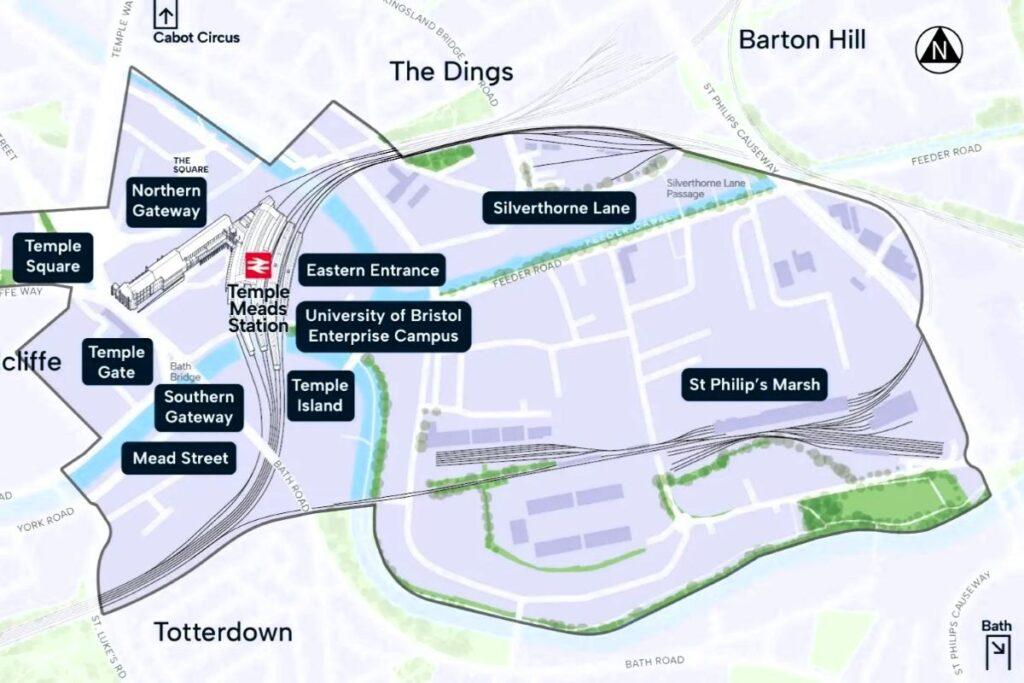
The Society has commented on the draft St Philips Marsh masterplan. We responded to the August 2025 and February 2026 consultations. The masterplan goes to Committee for approval in late September.
Our two main concerns are that:
- the proposed density of development is too high and will not be delivered in an acceptable way;
- the main open space is not large enough for the increased population.
As our response says …
The St Philips Marsh area is a key part of the Bristol Temple Quarter LLP delivery area. BTQ is committed to deliver meaningful place -based change for local people and yet this draft masterplan is weak on connectivity to the City Centre, to adjoining areas and communities such as Totterdown and for setting out a clear vision of a great new neighbourhood. There are not enough parameters in the masterplan to ensure that the key ingredients of a great new neighbourhood will be delivered. A great new place needs a strong mix of housing type and tenure, good connectivity, both within the area and with surrounding areas including walking and cycling routes; and adequate and accessible green and blue infrastructure. We accept that dense development is appropriate in St Philips Marsh, but only up to a certain level of density and if it is done in the right way. The suggested density of development is too high and risks yet more tall buildings which are not appropriate on this area. The amount of open space is too small.
This is an opportunity to plan a medium-rise neighbourhood of up to say 12-storey mixed-use housing and employment area to create a great new place. The bubble has burst on student housing; controls need to be put in place to ensure new homes, new solutions to medium-rise block including stacked homes and mansion type blocks typically seen in London but not part of the usual housing offer in Bristol. Likewise, the masterplan needs to be realistic about timescales and deliverability since we are told that the area is in multiple ownerships and at the present time land values are favouring retention of the long-established employment land uses.
The Civic Society notes the evolution of the masterplan but we still have some major concerns, most of which we have voiced before, that the opportunity to adopt a clear long-term vision for an exemplary new neighbourhood is not being promoted
Alan Morris